Bush Kindy & Nature Play
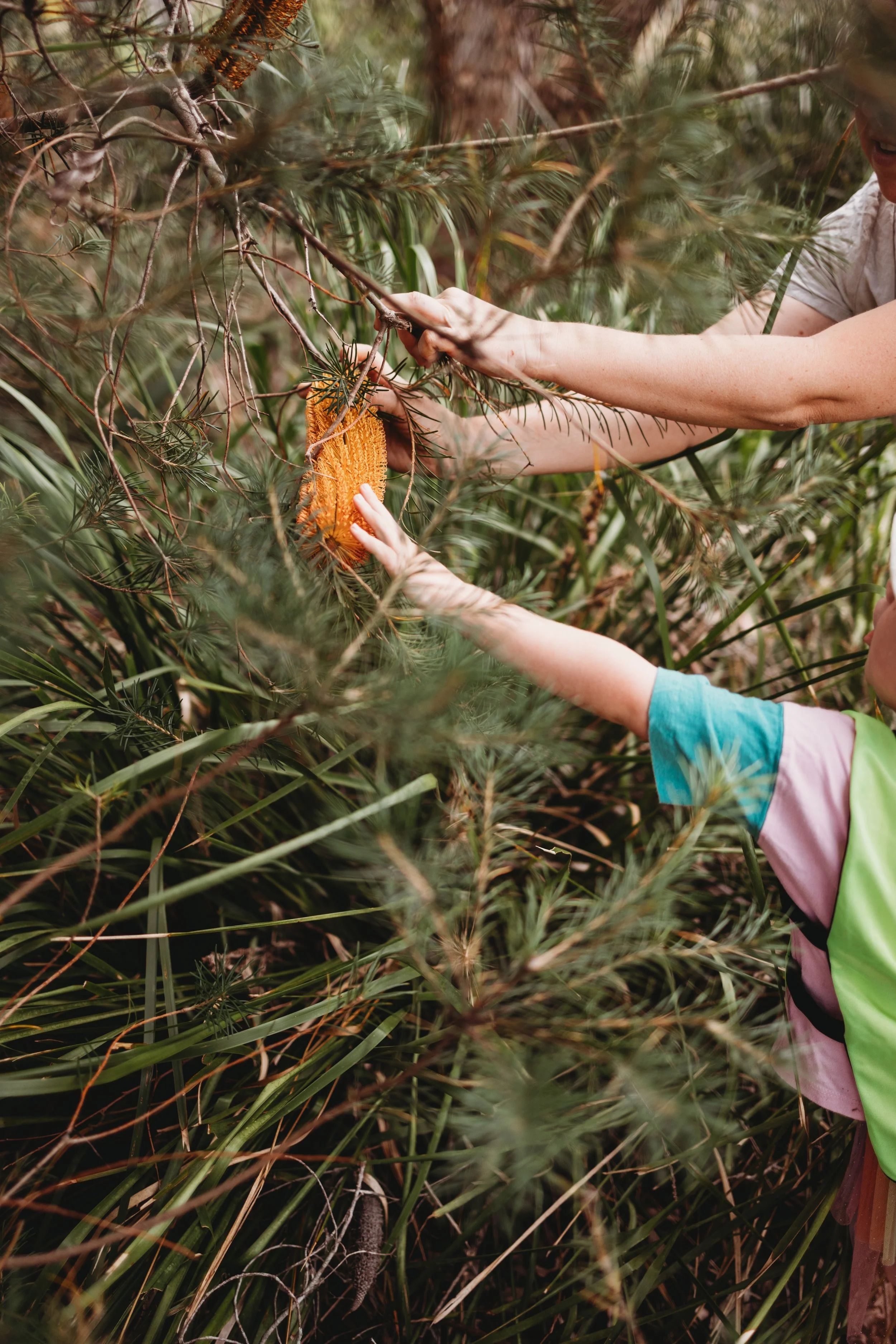
At Little Wildlings, Bush Kindy isn’t somewhere we go, it’s how we approach childhood, learning and play.
Our nature play philosophy is embedded in every day, which means we don’t need to leave the kindy gate to be ‘doing’ Bush Kindy. Children spend their days outdoors connecting with nature, climbing trees, using real tools, building fires, getting muddy, exploring, taking risks and following their own ideas.
This allows us to live our Bush Kindy philosophy on-site every day, while also regularly taking small groups of 10–15 children off-site for deeper, immersive experiences on Country and in our local natural spaces.
Bush Kindy is a nature-based, holistic, child-directed approach viewing children as capable (Williams-Siegfredsen, 2017).
Bush Kindy is essentially, regular, uninterrupted, child directed play, in nature, in all (safe) weather with readily available risky play opportunities (Button & Wilde, 2019; Coe, 2017).
During this time children engage in child-directed play (Barrable & Arvanitis, 2019) as they explore and experience the dynamics of natural settings, and connect with nature (Elliott & Chancellor, 2014).
As children connect with, and learn from one another through hands-on experiences, they build social emotional skills such as independence, confidence and self-awareness (Barrable & Arvanitis, 2019; Williams-Siegfredsen, 2017).
When and where is Bush Kindy?
Our nature play philosophy is seamlessly woven throughout our Kindergarten program for children aged 3–6 years.
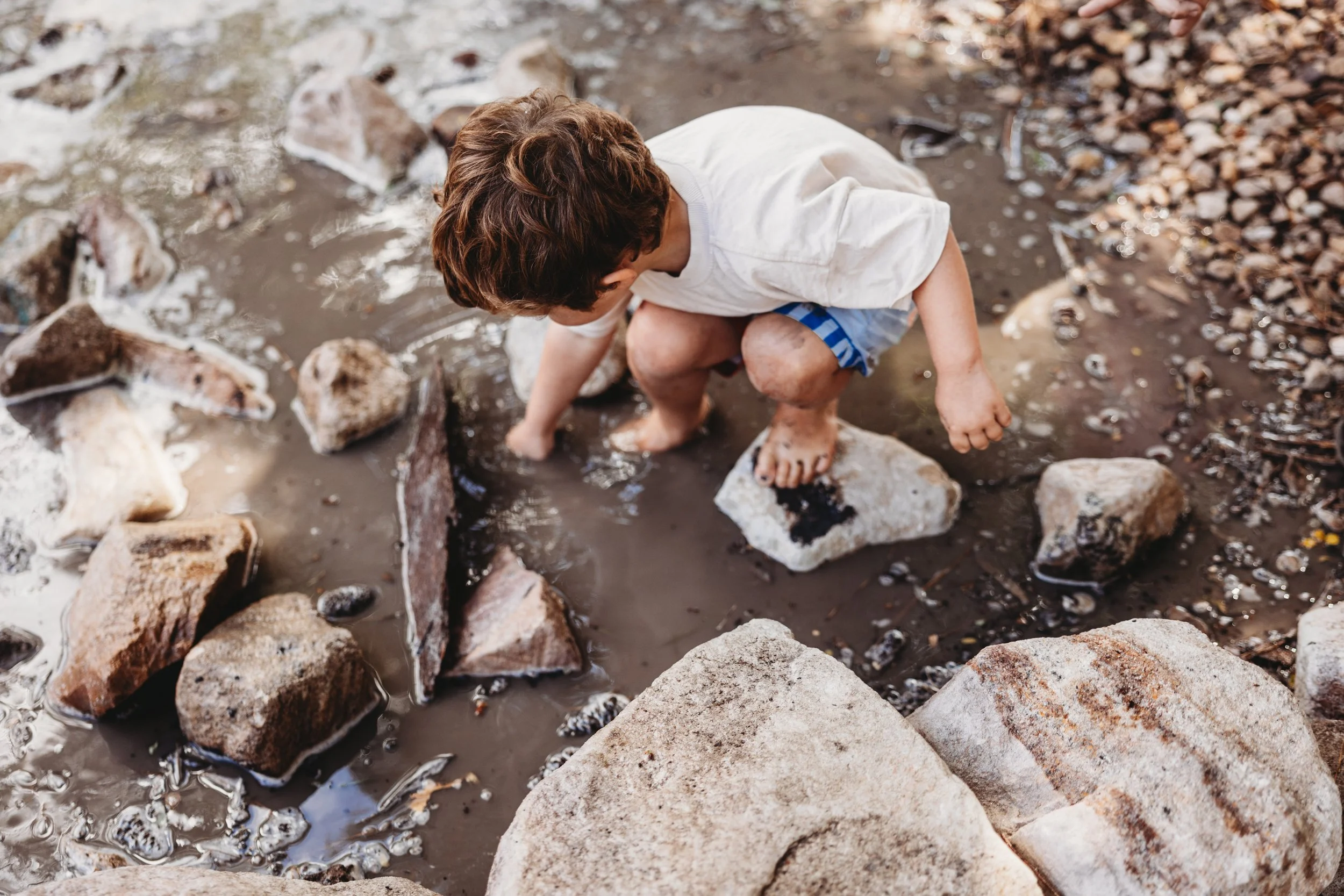
Nature play happens every day, rain or shine. Children explore our On Country natural landscape on-site, take regular local walks into the nearby reserve, including a beautiful nature strip alongside the footpath and a local playground and venture further into our wider community through planned excursions to explore bush and beach environments.
This means every child experiences regular, meaningful nature play as part of their everyday kindergarten experience, regardless of which days they attend, unless weather or environmental conditions make being outdoors unsafe.
What does Bush Kindy & Nature Play look like in action?
Spending our day outdoors, rain or shine
Climbing trees, balancing, swinging and exploring heights
Using real tools to make, build and create
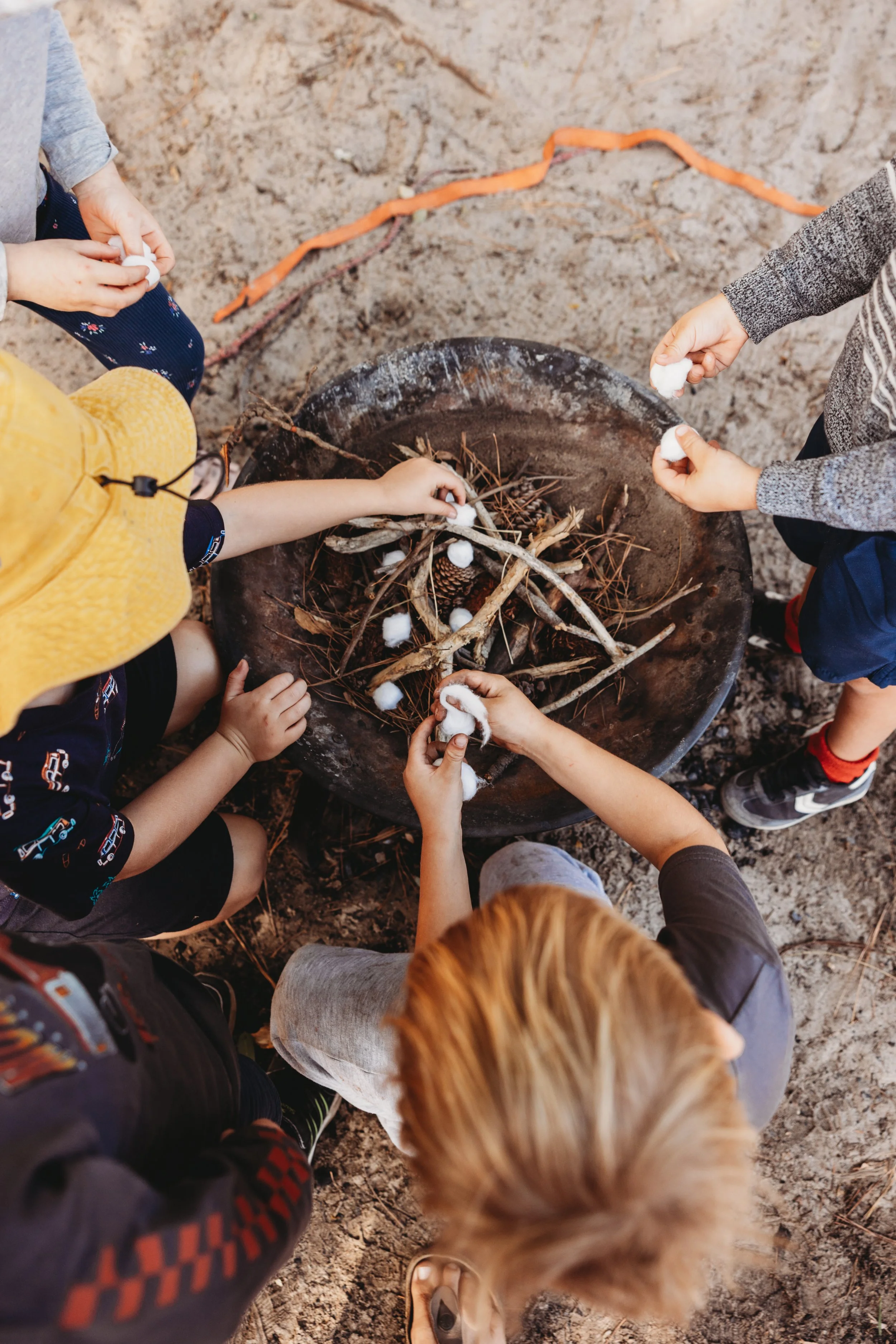
Lighting fires and cooking together
Building cubbies, shelters and creations with natural and loose materials
Exploring mud, water, sand and the changing seasons
Discovering plants, animals and the natural world
Going on walks and adventures on Country and in our local community
Taking on real challenges, risks and responsibilities
Having the time and freedom to follow children's own ideas, curiosity and play
What are the benefits of Nature Play?
Develop a sense of belonging and an attachment to place (Cumming & Nash, 2015)
Form a connection with nature and a deeper sense of sustainability (Kelly & White, 2013)
Are increasingly engaged in dialogue with educators (Cumming & Nash, 2015)
Demonstrate increased language and social skills as they engage, collaborate and compromise (Harris, 2017)
Slow down, and the flow of creativity and imagination is increased (Elliott & Chancellor, 2013)
Have the opportunity to safely take risks, learn to risk assess and develop resilience (Gill, 2010;)
Have an increased range of fine and gross motor skills, and enhanced proprioception and vestibular development (Sandseter, et al., 2012)
Demonstrate increased confidence as they become more self aware and independent (Duhn, 2012; Maynard, 2007)